.png)
What Happens When Leaders Commit to 24 Weeks of Leveling-Up.

We are living through one of the most significant shifts in leadership our generation has ever seen. New technologies, ever-changing workforce expectations, hybrid culture, global uncertainty… everything is evolving at record speed.
“The rate of change affecting businesses has risen steadily since 2019, increasing by 183% over the past four years and by 33% in 2024 alone.” (Accenture 2024)
And organizations are being forced to ask a new set of questions:
How do we prepare our leaders for what’s next?
How do we equip them to think strategically, communicate clearly, and adapt confidently?How do we create leaders who don’t just manage, but actually move organizations forward?
Our answer for the future is this:
Help leaders modernize their leadership, one intentional step at a time.
And the vehicle for that transformation? Level-Up™ Leadership.
Twenty-four weeks.
Twenty-seven leaders.
One immersive, multi-layered leadership journey designed to move beyond “checkbox training” and into real capability building.
Take the next five minutes to explore a behind-the-scenes look at how the program works and the powerful, practical capstone projects developed by our most recent cohort.
Why Our Programs Work
1. There are online modules, but not the kind you’re used to.
Our digital learning is built intentionally: short, gamified, practical, and tailored to what leaders actually need in their day-to-day. No filler. No fluff.
2. Learning isn’t passive: it’s applied immediately.
Every mission includes a real-world application task. Leaders test new concepts, communication styles, and problem-solving approaches right away, long before they “feel ready.” Because that’s how mastery is built.
3. Weekly live sessions connect leaders across industries.
In our virtual meetups, leaders dive deeper, troubleshoot challenges, and learn alongside professionals they’d never otherwise meet. This mixed-cohort approach creates cross-industry insight that is rare and powerful.
4. And then, everything culminates in the Capstone Project.
The capstone is where all the learning snaps together. Leaders are placed into cross-functional groups and challenged to solve a real organizational problem using tools from the Level-Up™ Leadership Framework. The result is not a hypothetical assignment but a polished, practical solution.
what we learned from our leaders
Before we get into the capstones, here are a few truths this cohort reinforced:
Leaders still value structured learning when it’s done well.
Many participants shared that even familiar concepts felt new again when presented concisely or applied through scenarios. Leaders don’t need MORE information. They need the right information at the right time.
Learning & development isn’t a checkbox, it’s an investment.
What organizations invest in leadership directly shapes performance, safety, communication, culture, and retention. In fact, organizations worldwide spend more than US $370 billion annually on leadership development (DDI, 2024).
Do you know what your organization is investing in? Have you ever paused to evaluate it?Start by using our Training Audit Tool. What was your score and more importantly, what will you do with it?
Introducing the capstones
The six capstones from this cohort demonstrate exactly what happens when leaders are given structure and space to innovate. Each team tackled a real organizational challenge and transformed it into a usable solution.
Here’s a closer look at the work they produced.
pod 1: The broken telephone effect: cascading communication template
Award: Clarity at Scale
Group Members: Annemarie (Extendicare), Karen (Kalpa)
When leadership communicates, the message shouldn’t change as it moves through the organization. This team set out to eliminate the ‘broken telephone’ effect and replace it with clarity, consistency, and confidence.
The Challenge 🤔
As messages move from senior leadership to frontline teams, something gets lost. Details shift. Priorities blur. Interpretation creeps in.
The result? Confusion, misalignment, inconsistent execution, and over time, reduced trust in leadership.
The group identified that this isn’t a communication effort problem. It’s a system problem. Without a standardized way to cascade information, every layer adds its own filter.
The Solution: A Standardized Communication System Leaders Can Trust 💡
To solve this, the team designed a one-page cascading communication template: a living document that travels with every major leadership directive. Their solution creates a single source of truth, ensuring that every employee, regardless of level, receives the same clear and complete message.
How it works:
Breaks communication into five essential elements: Vision (Why), Action (What), Timeline (When), Ownership (Who), Success Measures (How)
Clearly defines accountability at every stage
Removes ambiguity by standardizing how information is shared
Includes a built-in feedback loop to check understanding in real time
The result is communication that is no longer open to interpretation. It’s structured, aligned, and actionable.
Why It works ✅
Because clarity isn’t just about saying more: it’s about saying things consistently.
This system eliminates the gaps where miscommunication typically occurs and ensures that:
Leaders are aligned
Managers don’t need to reinterpret messaging
Employees understand both the “why” and the “how” behind their work
By removing guesswork, the tool creates a direct line between leadership intent and team execution.
Highlights & Outcomes ⭐️
Identified the root cause of miscommunication using a structured 5 Whys analysis
Designed a scalable, easy-to-use communication tool that fits into existing workflows
Introduced a “filter-proof” feedback loop using a one-question clarity check
Established a measurable goal:
Reduce rework and clarification requests by 30%
Increase employee clarity scores to 85% within 6 months
Created a repeatable system that transforms communication from a soft skill into a structured leadership process

At its core, this project reinforces a powerful truth: When communication is clear, everything else moves faster.
pod 2: The sales strategy handbook
Award: Best Systemization of Strategy
Group Member: Meredith, Sreecharan (White Tuque)
Sales success shouldn’t depend on who’s selling: it should depend on the system behind it. This individual set out to turn scattered wins into a repeatable, scalable strategy.
The Challenge 🤔
As organizations grow, sales processes often evolve organically. What starts as a few strong individual performers quickly becomes inconsistent, difficult to scale, and nearly impossible to predict.
The result? Unclear targeting, inconsistent messaging, stalled deals, and heavy reliance on individual effort rather than a unified system.
This pod identified that without structure, sales teams risk chasing too many opportunities, misallocating resources, and struggling to forecast growth with confidence.
The Solution: The Sales Strategy Handbook 💡
To address this, the pod created The Sales Strategy Handbook: a centralized, living resource that defines their way of selling.
Rather than adding complexity, the goal was to create a tool that integrates seamlessly into existing workflows and becomes part of the team’s weekly rhythm.
How it works:
Defines core sales foundations for each service (USP, ICP, buyer personas, and pain points)
Provides standardized playbooks for every stage of the sales process
Includes root cause analysis tools to understand why deals stall or fail
Offers a resource library of templates and tools for immediate use
Aligns sales, marketing, and delivery teams under one cohesive strategy
The result is a system that transforms sales from reactive and inconsistent… into structured and repeatable.
Why It Works ✅
Because great sales outcomes aren’t random: they’re built on clarity, alignment, and consistency.
This system ensures that:
Teams are aligned on who they’re selling to and why
Messaging is consistent across all touchpoints
Leaders spend less time firefighting and more time coaching
New team members ramp up faster with clear guidance
By documenting what works and standardizing how it’s applied, the handbook turns individual success into organizational capability.
Highlights & Outcomes ⭐️
Built a practical, easy-to-adopt system designed for real-world use
Created a structured 30-60-90 day rollout plan to support adoption
Established clear ownership across leadership to ensure the system is used
Defined measurable success metrics, including:
Increased pipeline accuracy by 20%
Reduced sales cycle time by 15% within 6 months
Achieving 100% team adoption of the handbook and playbooks
Reducing onboarding time for new sales team members by 30%
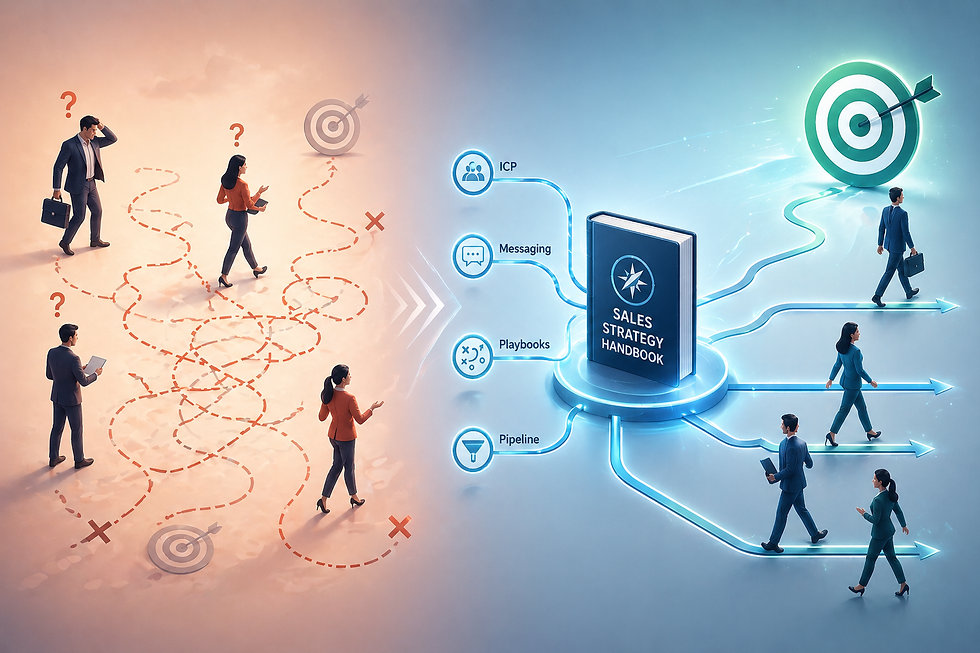
At its core, this project reinforces a powerful shift: When strategy is systemized, growth becomes predictable.
pod 3: From Day One: Rebuilding Engagement Through Modern Training Systems
Award: Best Root Cause Thinkers
Group Members: Michelle, Michael, Quinton (Innovative Automation)
Low engagement isn’t the problem, it’s the result of a system that was never designed for today’s workforce. This team set out to fix the system, not just the symptoms.
The Challenge 🤔
Employee engagement in training programs continues to decline, despite organizations investing time and resources into development. Participation is inconsistent, completion rates are low, and critical information - especially around safety and onboarding - is not sticking.
The group recognized that the issue wasn’t motivation, it was friction.
Through deeper analysis, they uncovered a pattern:
Training platforms were outdated and difficult to use
There was no clear ownership driving improvement
High maintenance costs prevented meaningful updates
The learning experience didn’t align with how modern employees consume information
The result? Disengagement, low compliance, and increased organizational risk.
The Solution: A Modern Training System That Starts on Day One 💡
Instead of layering on more content or pushing for more participation, the team reimagined the system entirely.
They developed “From Day One”: a modern onboarding and training experience designed to meet employees where they are, right from the start.
Their approach focuses on early clarity, accessibility, and real-world relevance.
How it works:
Introduces company culture, expectations, and communication channels from day one
Integrates health & safety training directly into onboarding
Uses a centralized, easy-to-navigate platform
Establishes clear ownership and accountability for training content
Aligns learning with real job expectations - not just compliance requirements
The result is a system that feels intuitive, engaging, and immediately valuable to employees.
Why It works ✅
Because engagement isn’t something you demand, it’s something you design for.
This solution removes the barriers that prevent participation and creates a learning experience that is:
Clear and easy to navigate
Relevant to day-to-day work
Built into existing workflows
Structured for long-term scalability
By focusing on the root cause instead of the symptoms, the team created a system that drives both engagement and retention.
Highlights & Outcomes ⭐️
Conducted a structured root cause analysis using a “5 Whys” approach
Identified outdated systems and lack of ownership as key drivers of disengagement
Designed a modern onboarding experience that improves clarity and confidence from day one
Created a centralized platform that reduces friction and increases accessibility
Positioned training as a tool for performance

At its core, this project reinforces a critical shift: When you fix the system, engagement follows.
pod 4: Workplace communication 2.0
Award: Best First Impression Strategy
Group Members: Tiffanie, Ryan, Mojit (Hormann)
First impressions aren’t just about onboarding, they’re shaped in every interaction. This team set out to ensure that from the very first conversation, expectations are clear, aligned, and actionable.
The Challenge 🤔
Across organizations, communication is often treated as a soft skill rather than a structured process. Expectations are shared informally, details get lost between teams, and clarity depends on the individual delivering the message.
The result? Misunderstood tasks, duplicated work, missed deadlines, and growing frustration across departments.
The group identified that poor communication doesn’t just slow things down: it directly impacts productivity, engagement, and business performance.
The Solution: CLEAR 2.0 — A Communication System Leaders Can Use Every Day 💡
To solve this, the team developed CLEAR 2.0: a structured communication framework embedded directly into leadership workflows.
Rather than adding more meetings or training, the goal was to create a simple system leaders could apply in real time: during delegation, project kickoffs, and cross-functional collaboration.
How it works:
Clarity: Define deliverables, ownership, and success criteria upfront
Listening: Confirm understanding before work begins
Empathy: Assess workload and adjust expectations realistically
Alignment: Use a simple written confirmation (Objective · Owner · Deadline)
Reinforcement: Provide structured feedback and recognition
The result is a repeatable communication system that removes ambiguity and ensures alignment from the very start.
Why It Works ✅
Because clarity isn’t something you hope for, it’s something you design.
CLEAR 2.0 transforms communication into a measurable leadership practice, ensuring that:
Expectations are consistently understood
Accountability is clearly defined
Teams move forward with confidence and direction
Leaders spend less time clarifying and more time executing
By embedding communication into everyday workflows, the system creates lasting behavioral change.
Highlights & Outcomes ⭐️
Identified lack of structured communication as the root cause of cross-department misalignment
Designed a simple, scalable framework that integrates into existing workflows
Piloted the system with measurable improvements in clarity and execution
Established a 90-day implementation plan with leadership buy-in and KPI tracking
Demonstrated measurable impact, including:
25% reduction in rework
20% increase in on-time delivery
30% reduction in clarification emails
Improved team confidence and engagement

At its core, this project reinforces a powerful idea: When communication is clear from the start, everything else follows.
pod 5: 1:1 Framework - Planting the seeds
Award: Consistency Creates Growth Award
Group Members: Karyn (Hormann), Patrick (Bayfield Ford)
Growth doesn’t happen in a single moment - it’s built through consistent, meaningful conversations. This team set out to make those conversations a habit, not an afterthought.
The Challenge 🤔
In many organizations, employee development is concentrated around annual reviews or occasional check-ins. While well-intentioned, these moments are often too infrequent to drive meaningful progress.
The result? Teams lose momentum between reviews, challenges go unaddressed, and opportunities for growth are missed.
The group identified that the issue wasn’t a lack of care: it was a lack of consistent structure to support ongoing development and connection.
The Solution: A Simple 1:1 Framework That Builds Momentum Over Time💡
To address this, the team created “Planting the Seeds”: a structured 1:1 framework designed to create consistent, meaningful touchpoints between leaders and their teams.
Rather than adding complexity, the goal was to introduce a simple, repeatable routine that leaders could realistically maintain.
How it works:
Connect: Launch the approach within the team and set expectations
Schedule: Hold monthly (or bi-weekly) 1:1s with no cancellations
Prepare: Each team member brings one win and one challenge
Lead: Managers listen, coach, and guide the conversation
Track: Capture key notes and actions to ensure follow-through
The framework is supported by a simple structure (Goals, Obstacles, Opportunities, Decisions) to keep conversations focused and productive.
Why It Works ✅
Because consistency builds trust and trust drives performance.
This approach ensures that:
Employees feel seen, heard, and supported regularly
Challenges are identified and addressed early
Progress is tracked over time, not guessed at later
Leaders shift from reactive problem-solving to proactive coaching
By embedding growth into everyday routines, the framework transforms development from a periodic event into an ongoing process.
Highlights & Outcomes ⭐️
Identified gaps in traditional performance management approaches
Designed a lightweight, scalable framework that fits into existing workflows
Created a repeatable structure that leaders can easily adopt and sustain
Strengthened alignment with company values and culture through regular connection
Reinforced key leadership behaviors including coaching, feedback, and motivation

At its core, this project reinforces a powerful truth: Small, consistent actions create meaningful, lasting growth.
pod 6: product change process updates
Award: Most Scalable Leadership System
Group Member: Mike (Hormann)
When processes don’t scale, people are forced to compensate. This project set out to fix the system so teams don’t have to.
The Challenge 🤔
In theory, product change processes are designed to ensure smooth, coordinated implementation across an organization. But in practice, things were breaking down.
Changes were being released before teams were ready. Key steps were skipped. Communication gaps led to confusion across departments.
The result? Outdated documentation, incorrect orders, increased warranty issues, and growing frustration across teams and customers.
Mike identified that the issue wasn’t isolated, it was systemic. The process relied too heavily on individuals to “figure it out,” rather than providing a structure that ensured readiness across the organization.
The Solution: A Scalable, End-to-End Change Management System💡
To address this, Mike proposed a full overhaul of the product change process: transforming it into a structured, scalable system that ensures alignment before execution.
His approach focused on strengthening each stage of the process while improving communication and accountability across departments.
How it works:
Revised ECR (Engineering Change Request): Clearly defines not just the change, but its full impact across sales, engineering, purchasing, production, and end users
Updated ECO (Engineering Change Order): Separates preparation from implementation, giving teams time to get ready before changes go live
Inventory Change Integration: Introduces tracking for materials, locations, and timelines, ensuring nothing is missed
Rebuilt APQP Checklist: Simplifies a complex 200+ item process to make it more practical, relevant, and likely to be followed
The result is a system that ensures everyone—not just engineering—is prepared when changes are implemented.
Why It Works ✅
Because scalable systems remove the need for last-minute scrambling.
This solution ensures that:
All stakeholders are aligned before changes are released
Teams have the time and information needed to prepare
Communication is clear and consistent across departments
Processes are followed because they are practical
By shifting from reactive fixes to proactive planning, the system reduces risk while improving efficiency and confidence across the organization.
Highlights & Outcomes ⭐️
Identified critical breakdowns in the existing change management process
Highlighted the risks of releasing changes before full readiness
Designed a more practical, streamlined system to improve adoption
Introduced cross-functional collaboration to ensure buy-in and alignment
Reduced complexity to increase consistency and long-term scalability
Positioned the organization to reduce errors, improve morale, and protect its reputation

At its core, this project reinforces a key principle: When systems scale effectively, people can focus on doing their best work, not fixing what’s broken.
Final Thoughts
Today’s leaders are being asked to navigate a world that looks nothing like it did even five years ago. Level-Up™ Leadership exists to help them rise to that challenge with confidence, clarity, and modern leadership tools that actually work.
This cohort proved just how much is possible when development is thoughtful and rooted in real workplace impact. If you're curious about joining the next wave of future-ready leaders, click HERE to learn more about our upcoming mixed cohort.


