.png)
Cohorts Make Better Leaders. Here’s Why.

So you signed up for a cooking class.
Half the room owns a sous-vide and is casually throwing around words like “emulsify.” The other half is secretly Googling what those words mean. Usually, this ends with the experts bored and the beginners overwhelmed.
But imagine if that same class was designed differently.
Instead of teaching one generic lesson, the instructor bridges the gap. The beginners get the foundation, the pros get a challenge, and they actually learn from each other rather than just the teacher.
The skill levels didn't change. The design did.
That is the secret sauce of cohort-based learning, and it’s why modern training is finally moving away from "one size fits all."
what is cohort-based learning?
Simply put, it’s a group of people starting a journey together and crossing the finish line together. It’s not a new concept - it’s how most of us grew up learning in school. The goal is to bring that shared rhythm into the professional world.
The biggest difference from your standard online course? You don’t disappear into a content black hole. You start together, you learn together, and you finish together.
Isn’t this just social learning?

Social learning tends to be informal and unstructured. It happens when you:
Learn by watching a colleague
Pick up tips during job shadowing
Ask questions in a shared workspace
Scroll LinkedIn and accidentally learn something useful
On the other hand, cohort-based learning has a clear path, specific goals, timelines, and usually some form of facilitation or guidance to keep things moving. You still get the social element, but it’s anchored to outcomes, not left to chance.
what makes a cohort course work?
A good cohort experience doesn’t happen by accident. A few ingredients matter a lot.
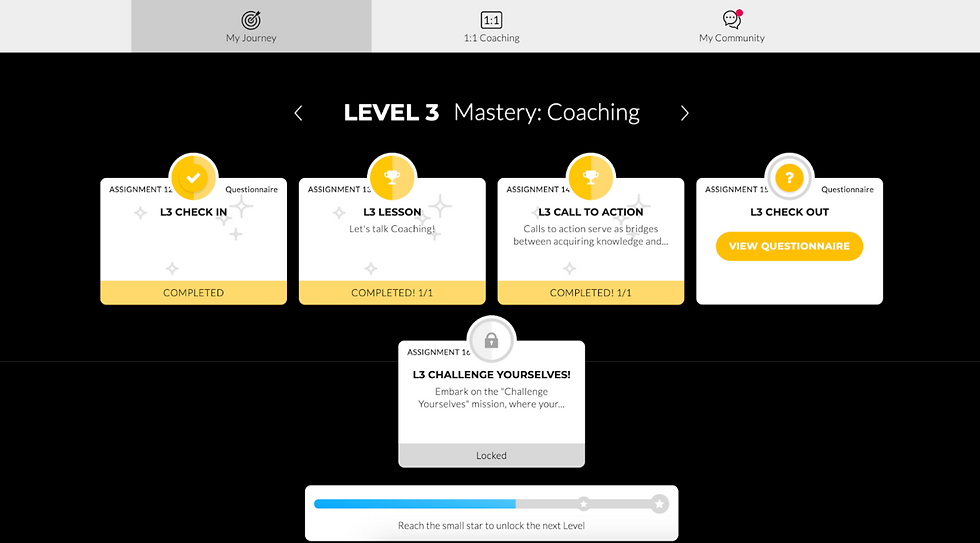
1) A clear structure
If everyone is expected to move forward together, the roadmap needs to be obvious.
That means:
Clear objectives
Logical progression
A shared understanding of “where we are” and “what’s next”
Without this, cohorts quickly drift and suddenly you’re back in that chaotic cooking class.
2) easy ways to collaborate
Learners need spaces to talk, ask questions, and share ideas.
This could be:
Live sessions
Group chats
Breakout discussions
Forums tied to the facilitators
The goal isn’t just communication, it’s connection. When people feel comfortable with one another, participation goes way up.

3) a mix of live and flexible learning
The best cohort programs blend:
Live moments (discussions, workshops, group problem-solving)
On-your-own time (videos, reflection, application, short assignments)
This balance gives people space to think while still benefiting from real-time interaction.

4) Strong facilitation
Cohorts need someone minding the flow.
A facilitator helps:
Keep the group on track
Encourage quieter voices
Manage energy and dynamics
Provide feedback and clarity when things get messy
Without this role, even the best-designed cohort can stall.

Why cohort-based learning actually works
At first glance, moving everyone at the same pace can sound restrictive. But in practice, it unlocks some pretty powerful benefits.
People stick with it
Self-paced courses are notorious for good intentions and poor follow-through.
We’ve all been there: Sign up, start strong… then life happens.
Cohorts change that dynamic. When you know others are showing up - and noticing when you don’t - motivation shifts. Completion rates rise because learning becomes a shared commitment, not a solo task.
Real connection happens
Learning alongside the same people week after week builds trust, especially when those people don’t all come from the same organization.
In mixed cohorts, you’re learning with leaders and professionals from different industries and roles. You’re exposed to how other teams solve problems, communicate, and make decisions - not just how things work inside your own bubble.
Feedback is faster (and better)
Instead of waiting days for answers, learners can:
Ask questions live
Learn from peers’ perspectives
Course-correct in real time
It mirrors real work
Most meaningful work doesn’t happen alone.
Cohort-based learning reflects that reality. It gives learners a safe place to practice working through challenges together before they show up in real-world situations.
Of course, it’s not perfect
Like any approach, cohort learning has its challenges, but they’re manageable with the right design choices.
🔴 Scheduling can be tricky
🟢 Rather than relying solely on live sessions, strong cohort programs balance live moments with flexible, self-paced learning. That way, learners stay connected without feeling boxed into a rigid schedule.
🔴 It requires more facilitation
🟢 Make facilitation intentional: not to control the room, but to bridge perspectives and make sure every voice has space.
🔴 Learners are at different skill levels
🟢 Different roles, industries, and experience levels don’t dilute the experience, they strengthen it. With clear expectations and thoughtful group design, learners gain insight they simply wouldn’t get from a room full of people who all think the same way.
🔴 Not everyone loves group learning
🟢 The experience should be opt-in by design. Cohort learning works best when people know what they’re signing up for. Setting expectations upfront ensures learners come in ready to participate, contribute, and grow alongside others.
when does cohort learning make the most sense?
Makes Sense | Makes Less Sense |
Leadership development | Highly individualized learning paths |
Longer-form online courses where motivation matters | Short, informational content where interaction adds little value |
Skill-building workshops | Deeply technical skills that require variable pacing |
Professional certifications | |
Onboarding programs |
Final thoughts
Learning deepens when you step outside your bubble.
That’s why at Botree, we love mixed cohorts. When you bring together people from different companies and experience levels, you get fresh perspectives that challenge the way you think. You get to test ideas in a safe space and see how other leaders operate outside your organization.
Want to join us?
Our next cohort, Level-Up™ Leadership, begins at the end of March. It’s designed for real-world application, not just theory.
If you’re ready to learn alongside a new network of peers, click HERE to get the details.